

What Makes a Matcha Scone Different From a Standard Scone

Matcha scones follow the same
base formula as a classic British scone: cold butter, flour, and cream. The addition of ceremonial-grade matcha changes the flavour profile entirely, bringing a grassy, umami depth that cuts through the richness of the butter and cream so each bite tastes layered rather than flat.
The bitterness in matcha is not a flaw to work around. It is what keeps the scone from tasting too sweet and gives it a complexity that plain or fruit scones cannot match.
Why White Chocolate Balances Matcha Bitterness in Baked Goods
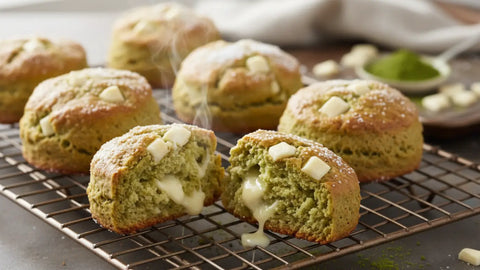
White chocolate has no cocoa solids, which means it brings sweetness and fat without any competing bitterness of its own. In matcha white chocolate scones, that sweetness sits directly against matcha's grassy, umami edge and softens it without erasing it.
The cocoa butter in white chocolate also melts during baking and distributes through the dough, creating pockets of creaminess that round out the texture. Matcha scones white chocolate hold moisture better than plain matcha scones for this reason, and the flavour stays balanced from the first bite to the last rather than tipping bitter as the scone cools.
How to Add Mix-ins Without Deflating the Dough

Fold white chocolate chips into the dough at the last stage, after the wet ingredients have been incorporated and the dough is just barely holding together. Overworking the dough after adding mix-ins toughens the gluten structure and makes the scones dense.
If you are pressing the dough into a disc to cut wedges rather than using a cutter, press firmly but stop as soon as the dough coheres. Every extra press compresses the butter pockets you have worked to preserve.
An egg wash brushed on top before baking will help the scones take on colour without drying out. A heavy cream wash does the same with a slightly softer crust finish.
Matcha Scone Calories and What Actually Drives the Count
Where the Calories in a Matcha Scone Come From
Matcha scone calories sit between 200 and 400 per scone depending on batch size and ingredients. The main drivers are butter (around 100 calories per 14 grams), heavy cream, and any additions like white chocolate or glaze.
Matcha powder itself contributes almost nothing calorically. One teaspoon of matcha contains roughly five calories, which means even a generous recipe using two teaspoons adds ten calories to the entire batch. The powder's contribution is flavour and colour, not energy density.
Cutting the batch into eight pieces rather than six reduces each serving by around fifty to eighty calories without changing the recipe. This is the simplest adjustment available if you are watching the count.
How Cream and Sugar Reductions Change the Final Scone
Substituting whole milk for heavy cream reduces fat content but also reduces moisture and richness. The scones will be slightly drier and less tender. If you make this swap, add a small amount of butter to compensate for the lost fat.
Reducing sugar by twenty percent does not significantly affect the scone's structure because sugar plays a relatively minor structural role in a traditional scone recipe compared to butter and eggs.
Teas That Pair Well With Matcha Scones
Matcha Latte
A matcha latte is the most natural pairing because it echoes the green tea already in the scone without doubling the bitterness. The milk softens both drinks, creating a consistent creaminess across the whole experience.
Sencha
Not every tea pairs well with a buttery bake. Sencha is bright, grassy, and slightly astringent, and that astringency sharpens next to fat rather than cutting through it, which makes the scone feel heavier on the palate, not lighter.
Gyokuro
Shade-grown teas like gyokuro and ceremonial matcha develop high levels of L-theanine and a strong umami character. That umami lifts and clarifies between bites, resetting the palate the way citrus cuts through a rich sauce. One sip between bites of matcha green tea scones makes the next bite taste as clean as the first.
Hojicha
Hojicha works from the opposite direction. Its roasted, caramel-like flavour contrasts the grassy notes in the scone rather than matching them, which keeps the pairing interesting across multiple bites. Cold brew matcha is the best option for warmer months, since its lower bitterness and smooth finish complement white chocolate matcha scones particularly well. If you want to explore NioTeas loose leaf teas and matcha options for pairing, the full collection includes tasting notes and brew guidance for each.
Comments (0)
There are no comments for this article. Be the first one to leave a message!