

Tokoname kyusu vs Banko kyusu comes down to how the clay affects brewing, heat retention, and flavour in the cup. Both are unglazed Japanese teapots, but differences in mineral composition and firing method lead to noticeably different results during steeping.
Tokoname clay is iron-rich and more porous, while Banko clay is denser and fired in a reduction atmosphere. These structural differences influence how each teapot interacts with water, retains heat, and responds across multiple infusions.
The choice is not just aesthetic. It directly affects how a tea extracts, how smooth or sharp it tastes, and how consistent the brewing process feels over time.
Tokoname is often associated with softer, more rounded results, while Banko is known for stability, heat retention, and versatility across tea types.
This article explains how Tokoname Kyusu vs Banko kyusu differ in clay composition, brewing performance, and ideal tea pairings, so you can choose the right teapot based on how you actually brew.
Tokoname vs Banko Kyusu: Porous Clay and Dense Clay

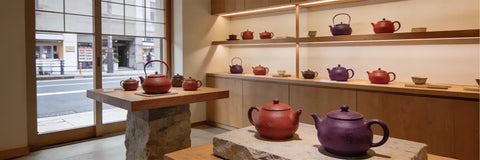
The difference between tokoname kyusu vs banko kyusu starts with clay composition and firing method, where Tokoname uses iron-rich porous clay, and Banko uses denser clay fired in a low-oxygen environment. Tokoname clay, sourced in Aichi Prefecture, carries a high iron content that gives finished pots a warm reddish-brown color. Banko clay, called shidei or purple clay, develops its distinctive hue through reduction firing, a process that limits oxygen in the kiln and causes the iron compounds in the clay to shift from oxidized red toward a blue-grey tone that blends into purple.
That firing difference is not cosmetic. Reduced atmosphere changes the chemical state of iron in the clay, and many experienced brewers hold that this influences how the pot interacts with the compounds in green tea. Tokoname fires in a standard oxidizing atmosphere for twelve to twenty-four hours, producing a harder, porous surface that seasons with use. Banko clay fires at higher temperatures, creating a denser structure despite thinner walls.
Wall thickness is a practical distinction. Banko potters can work their clay thinner without sacrificing structural integrity, producing pots that heat and cool more responsively. A Tokoname teapot has thicker walls overall, which behaves differently once heat is applied and held across a multi-steep session. If you want to go deeper on how unglazed clay affects brewing before choosing a style, this guide covers the topic in full. 👉 Clay Kyusu Teapot: What Makes It Unique for Japanese Tea
How Tokoname Clay Affects Flavor and Brewing
When comparing tokoname kyusu vs banko kyusu, the effect on flavor becomes most noticeable in how each clay interacts with tannins during brewing.
Iron Content and Tannin Interaction
The iron in Tokoname clay may interact with tannins in green tea. Tannins are the astringent, drying compounds that can make a cup of sencha feel sharp or rough at the back of the palate. When hot water sits in an unglazed Tokoname pot, the iron is thought to interact with these compounds and may reduce their perceived intensity in the final brew.
The practical result is a rounder, softer cup. Grassy notes stay present, but the harsher edges smooth out, making a Tokoname teapot particularly useful for mid-grade senchas that can lean astringent when brewed in a neutral vessel.
Seasoning and Long-Term Flavor Development
Unglazed Tokoname clay is porous enough to absorb trace elements from every brew. Over months and years of use, the interior walls build a thin film of tea compounds called narawashi, which gradually shifts the brewing character of the pot toward the specific teas brewed in it most often. Brewers who dedicate one pot exclusively to sencha report that it becomes incrementally better suited to that tea over time.
This is also why serious drinkers keep separate pots for different tea types. A pot used regularly for hojicha absorbs roasted notes that can transfer into the next brew of delicate gyokuro, so keeping them separate is a practical discipline and not merely a ceremonial habit. For brewers curious about how a coated surface changes both the look and the brewing character of a teapot, the differences between glazed and unglazed are worth understanding before buying. 👉 Glazed Kyusu: What Makes This Teapot Different
How Banko Clay Changes the Tea Experience
In the tokoname kyusu vs banko kyusu comparison, Banko stands out for its heat retention and the way it supports umami-heavy teas. The reduction atmosphere used in firing Banko clay produces a teapot many brewers associate with enhanced umami, the savory depth already present in shaded teas like gyokuro and high-grade kabusecha. While the exact mechanism is still debated, many report that these teas taste richer and more cohesive in a Banko kyusu compared to a neutral vessel, making it especially appealing for those who prioritize umami-forward profiles.
At the same time, Banko clay is denser and less porous than Tokoname, meaning it seasons more slowly and is less likely to transfer flavors between different teas. This makes it a practical option for brewers who rotate between green, roasted, and even oolong teas, while also handling a wider range of brewing temperatures effectively.
Texture, Finish, and Visual Differences
In the hand, a Tokoname pot feels distinctly gritty on its unglazed exterior. The clay has a granular quality that becomes apparent in direct light. Finished pots range from terracotta red to deep burgundy depending on clay grade and firing time. Some pieces are fully unglazed inside and out; others have a glazed exterior while the interior stays bare clay to preserve the seasoning effect.
Banko has a smoother exterior surface. The purple-grey color is distinctive enough that the two traditions are rarely confused side by side. Banko pieces often feel lighter for their size due to thinner walls, and the lid fit on quality pieces is famously snug. That tight seal holds heat effectively during steeping in a way that looser-fitting lids cannot match.
Both traditions produce a wide quality range, and for those who want to observe the brew in real time rather than work with opaque clay, a glass kyusu offers a visually transparent alternative worth considering alongside these two styles. At the mass-production level, filters are pressed rather than hand-carved. At the artisan level, Tokoname pieces feature hand-carved sasame filters with dozens of fine holes, and Banko pieces show exceptional precision in wall thickness and lid geometry. At similar price points, those construction details are what separate a well-made piece from an average one.
Brewing Performance and Heat Retention

How Banko Holds Heat Longer
Brewing performance is another key factor in the tokoname kyusu vs banko kyusu decision. Banko clay holds heat with unusual efficiency given how thin its walls are. The dense mineral composition slows the rate of heat loss, which means the pot stays warmer for longer between pours. This matters most when brewing teas that benefit from consistent temperature across multiple steeps, particularly hojicha, genmaicha, and bancha, where you want the water to remain in the 90 to 95 degree range throughout a session.
For anyone brewing for more than one person, this heat retention means the final cup poured is closer in temperature to the first. That consistency is harder to achieve with thicker-walled pots, where heat escapes more quickly across successive pours.
How a Tokoname Kyusu Performs Across Multiple Steeps
A Japanese kyusu made from Tokoname clay does not retain heat quite as efficiently as Banko, but this is less of a problem than it sounds for most Japanese green teas. Sencha, gyokuro, and kabusecha brew at lower temperatures, typically 60 to 80 degrees Celsius, so a moderate cooling rate is often an advantage: the brew reaches its ideal temperature faster and the leaves face less risk of overextraction.
The clay filter in a well-made Tokoname pot, particularly the hand-carved sasame style found in a kyusu teapot with strainer, is also well suited to the fragmented leaf structure of fukamushi sencha. The fine holes catch broken particles without blocking flow, keeping the pour clean throughout the session without needing a secondary strainer.
Which Teas Work Best with Each Style
Teas That Suit a Tokoname Kyusu
Tokoname is the stronger choice for everyday sencha, shincha, kabusecha, and gyokuro, and pairing the right sencha kyusu to your leaf grade makes a consistent difference in the cup. For sencha specifically, the iron-tannin interaction reduces the grassy sharpness that can dominate mid-grade leaves and produces a softer, more approachable cup. For high-grade gyokuro or first-flush shincha where maximum clarity and sweetness are the goal, a well-seasoned Tokoname kyusu is hard to beat.
Fukamushi sencha drinkers also benefit from the fine sasame filter found on quality Tokoname pots. The deeply steamed leaves produce significant fine particle content, and a properly matched filter keeps the pour clean from first steep to last.
Teas That Suit a Banko Kyusu
A Banko kyusu performs exceptionally well with teas where umami is the primary flavor goal, including high-grade gyokuro and kabusecha. It also suits the roasted tea category: hojicha, genmaicha, and kuki hojicha all benefit from the heat retention that the dense clay provides, and the neutral seasoning profile means roasted flavors do not accumulate inside the pot and distort future brews.
Brewers who enjoy oolong teas alongside their Japanese green teas tend to find this style of pot easier to use across a wider range without needing a dedicated vessel for each type.
When Each Kyusu Makes More Sense
For anyone whose daily tea is sencha and who wants a pot that improves with consistent use, the Tokoname kyusu vs Banko kyusu answer is clear: start with Tokoname. Its iron-rich clay works well with grassy or astringent senchas, and the seasoning effect builds useful character over time, which is why it's often recommended as a first kyusu.
If your tea routine includes gyokuro, oolong, or roasted teas, Banko offers more versatility. Its denser clay retains heat effectively and is less prone to flavor transfer, making it easier to switch between different tea types without managing separate pots.
Both are worth owning as your collection grows. Many experienced tea drinkers maintain a Tokoname kyusu vs Banko kyusu setup, using each as a specialized tool rather than relying on a single pot for everything. Ultimately, neither is strictly better, the right choice depends on what you brew most and whether you value versatility or long-term flavor development.
For anyone ready to put this into practice, Nio Teas carries a curated selection of Japanese teaware, including Tokoname kyusu suited to different brewing routines. For a Tokoname-style option that fits seamlessly into a daily green tea routine, Black Kyusu is a strong place to start.

Comments (0)
There are no comments for this article. Be the first one to leave a message!